How does an air gap cause PD?
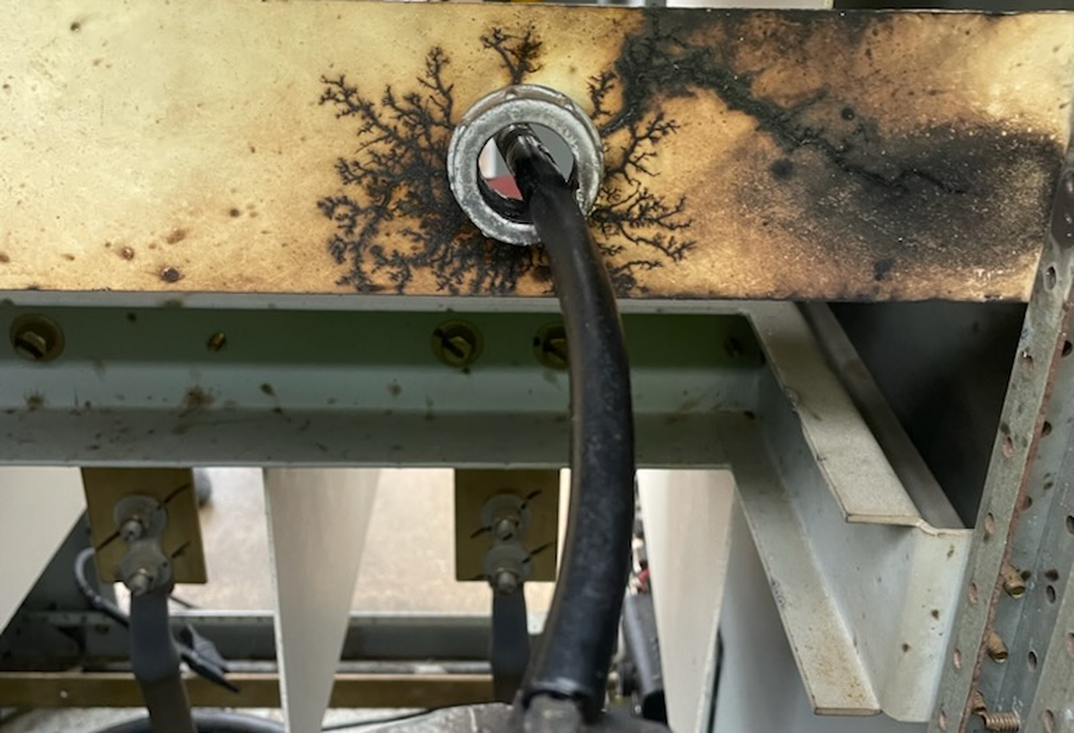
Air Gap Partial Discharge (PD) is caused by a wide range of factors, including poorly fitted insulating materials such as boots, grommets, tie wraps, and sleeving. These materials seem harmless because they are insulating, but can cause PD instead of preventing it.
Partial discharge is a tricky thing we don’t see every day and sometimes, it seems to defy physics. For example, if I have plenty of solid insulation to withstand the voltage and I add an air gap (more insulation) without reducing the solid insulation, suddenly, I’ve got partial discharge occurring. Defies logic right? Not really, just another tricky PD thing.
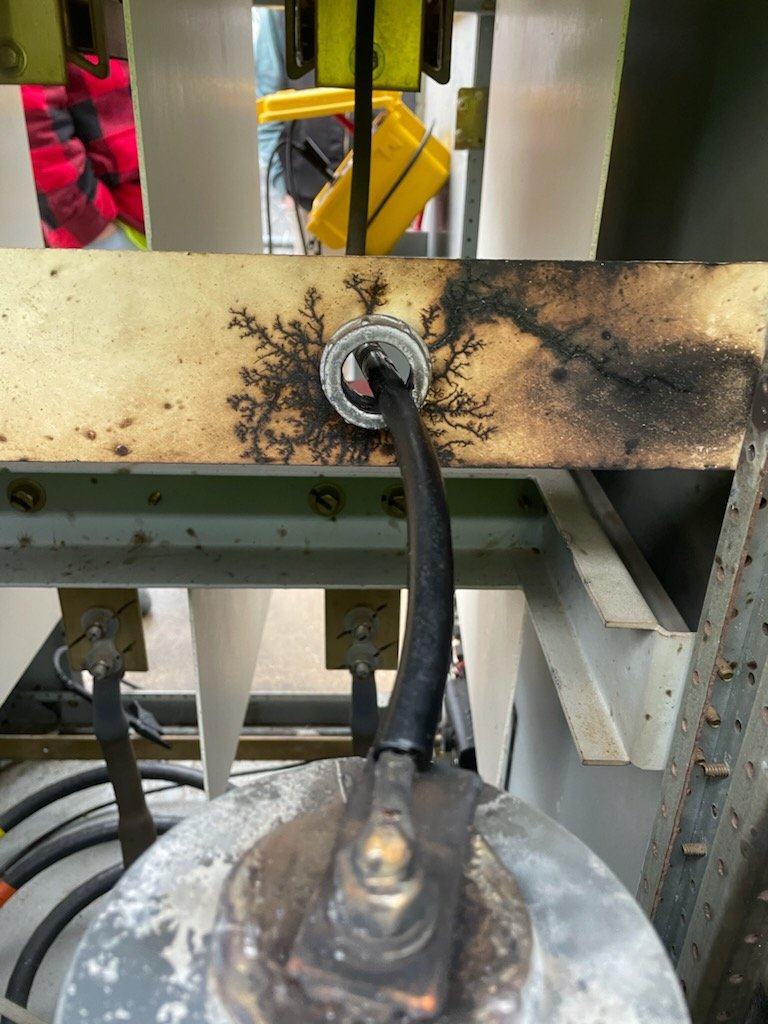
Let’s look at the picture and diagram below. It’s an insulated, unshielded MV cable going through a grommet that is in a hole in a Glastic* barrier board. Imagine the cable insulation is a tight fit to the grommet and the grommet is a tight fit to the Glastic. Since all three insulators have similar permittivity, the electric field is evenly distributed and well below the withstand of the insulation. It all works great.
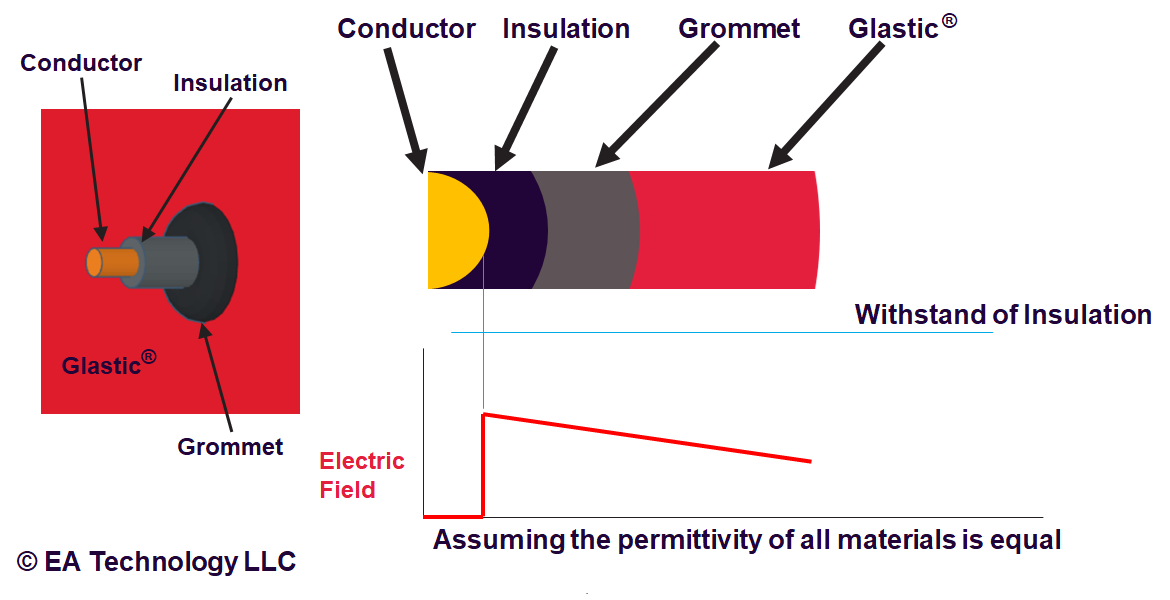
Now let’s look at the same situation but where the grommet to cable is loose fitting and the grommet is loose fitting in the hole. The air gaps between the insulators have a much lower permittivity and therefore a higher voltage field will occur across the gap. Combine that with a lower withstand for air and discharge occurs! If you look at the picture on the left, It’s clear that the insulation on the cable is degrading where there is a gap.
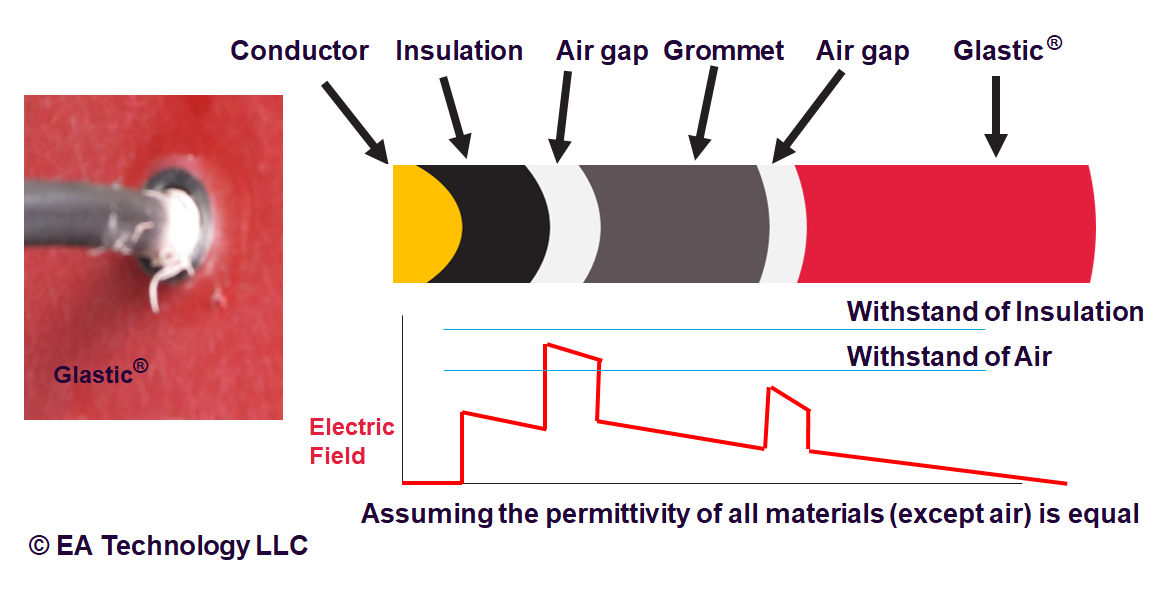
The partial discharge won’t show itself with a dielectric withstand test or with an insulation resistance test, but it will be there from the onset and last until the system fails. Any wiring done with unshielded cable at 2.5KV and above needs to be done with electric stress control in mind. When using very low rated wire (600V), directly in air can cause problems if the voltage field is too high.
Online PD testing using ultrasonic detection would find these types of issues immediately upon energization if the situation is sufficiently severe. In other cases, humidity or contamination may cause PD to appear only under the right conditions.
* (Glastic is a group of thermoset fiberglass-reinforced polyester insulating products produced by the Glastic Corporation)