Solar farms get creative
Ever wonder why we are building solar farms on agricultural land, when there are plenty of other places to locate panels? Malaysia’s The Star newspaper has looked at some of the thought-provoking alternatives being pursued around the world.
The Star points out that powering just one megawatt of capacity requires at least five acres, meaning a 200-megawatt project (roughly 3,000 panels) takes up as much space as 550 American football fields.
And it spotlights five unusual locations where solar arrays are taking root without sacrificing farmland:
Car parks
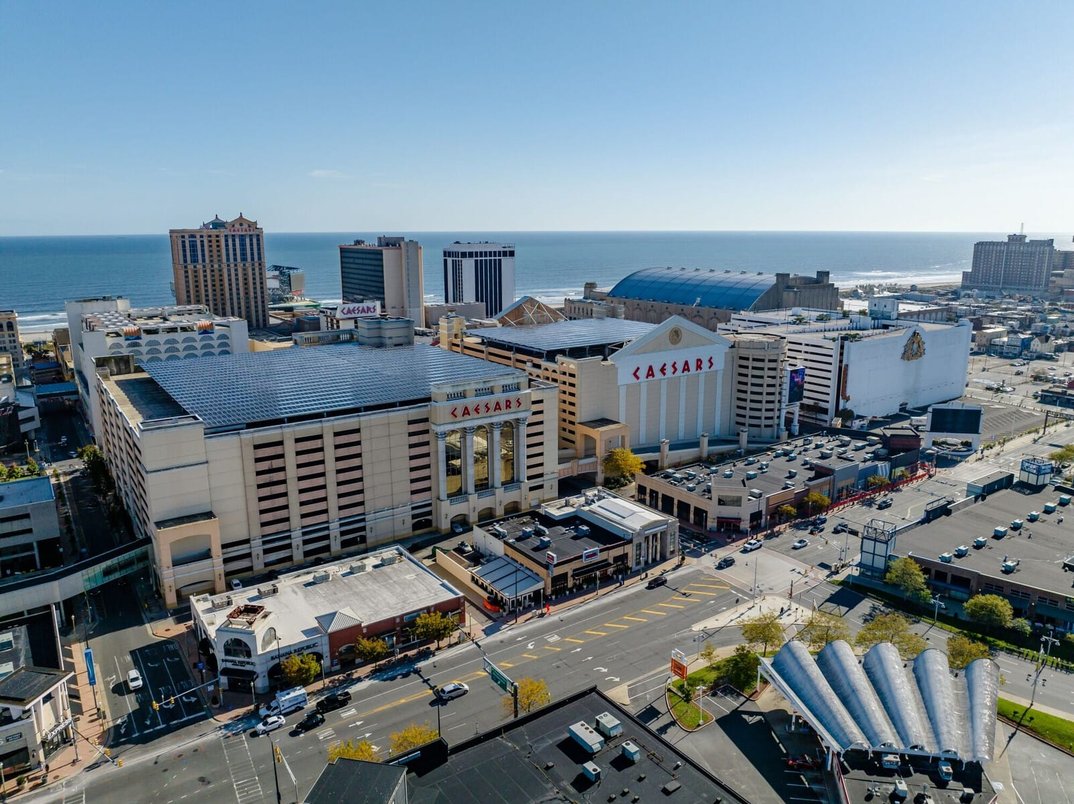
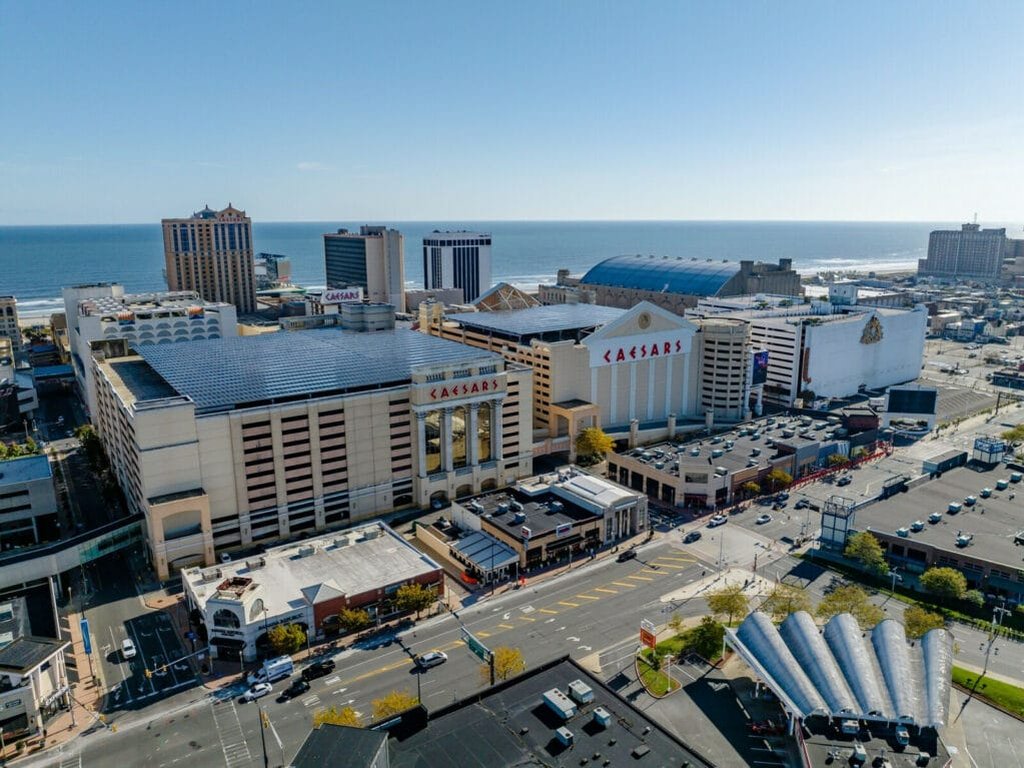
New York-based DSD Renewables is behind a project to add solar canopies to 16 parking lots and garages at Rutgers University in New Jersey and has installed almost 200 MW of canopy projects across the US since 2019. It’s also the architect of a 6.5 MW canopy project at Caesars Entertainment Casinos in Atlantic City, New Jersey (above: picture courtesy DSD Renewables).
Redundant golf courses
On Long Island, the Calverton Links Golf Course is home to a nearly 23 MW solar project that opened in 2022, nine years after the course closed for business. The project is owned by National Grid Ventures, the venture capital arm of National Grid, which operates power grids in the UK and US.
Floating solar farms
In China, a massive floating solar farm in Huainan in the eastern Anhui province boasts more than 500,000 panels – enough to generate power for over 100,000 homes. The flotilla of panels is the size of 400 soccer pitches and stretches across an artificial lake that sits on top of a former coal mine
Last year, the largest floating solar project in the US went online in New Jersey, where it generates enough energy to power 1,400 homes.
Landfills & decommissioned fossil fuel sites
Decommissioned fossil fuel sites, which already have access to local power grids, are excellent candidates for solar farms, says New York-based renewables company CleanCapital. It owns and operates 300 MW of solar capacity, including solar farms on a former steel plant in Buffalo, and on a landfill site in Bethel, New York.
Massachusetts offers its own tax incentives for developers to install solar on brownfields. The state has 92 solar farms on closed landfills, totalling 256 MW.
Solar art
Land Art Generator is a US organisation that holds competitions for solar art designers and connects the winners to communities that provide public art grants. Started in 2008, Land Art Generator now has more than 1,500 artist ideas which it promotes to communities around the world.
Projects include a solar panel mural at a primary school in California, delivering 4% of the school’s power, and a planned 100 ft high artwork in Houston, generating enough electricity for 40 nearby homes.